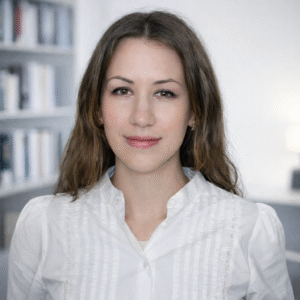
A Raphael Morrison Dorman Postdoctoral Fellow, Weatherhead Center for International Affairs, Harvard University.
Salam Alsaadi holds a PhD in political science from the University of Toronto. He focuses on authoritarianism and contentious politics in divided societies, with a regional emphasis on the Middle East and North Africa. His work has appeared in American Political Science Review and Comparative Politics. His current book project examines the survival and governance strategies of minority-dominated regimes.
Hosted by: Tessera – Graduate Research Collective
Participants: Justinas Stankus (Moderator), Dr. Salam Alsaadi (Guest), Roberta Rosania Gerevasi, Arash Aslan Beigi, Lina Rostovtseva
Introduction
Justinas:
Welcome, and thank you for taking the time to meet with members of Tessera, a graduate student research collective focused on questions of international security. Today we’re joined by Dr. Salam Alsaadi, a postdoctoral researcher at Harvard University, to discuss how to execute a research project, navigate fieldwork challenges, and plan an academic career — including how to find a postdoc position.
Background and Early Career
Dr. Alsaadi:
I actually began my career as a journalist, which gave me valuable field experience and helped me identify the topics I’m passionate about — particularly protests and uprisings in the Middle East.
Working in journalism helped define my academic interests and subsequently shaped my research focus. Spending time in the field allowed me to build both meaningful connections and develop a genuine passion for my subject matter.
For those considering a PhD, I would recommend first working in a related field. This experience will help you make an informed decision about whether to pursue academia or continue in your professional career.
Graduate Studies and Research Skills
Justinas:
Could you please say a few things about your first steps in the graduate program?
Dr. Alsaadi:
I completed a one-year Master’s degree at the University of Toronto. A short MA program can be an excellent stepping stone if you’re considering pursuing a PhD.
During your undergraduate studies, it’s important to focus on developing skills relevant to your field — these will prove crucial later on.
Once you’re in a PhD program, you should start thinking about publications early. Even papers written for seminar courses can be developed into publishable work. I published my first piece before beginning my MA, and that experience was instrumental in securing later scholarships and academic opportunities.
Research Questions and Fieldwork
Justinas:
How did your background in journalism help you conduct fieldwork later on?
Dr. Alsaadi:
In a PhD, your research question is everything — it signals why your work matters. Some questions are too broad or lack sufficient specificity, and that’s where preliminary fieldwork becomes essential. It helps refine your question and establishes reliable connections in the field.
Lina:
How do you develop trust with locals while conducting field work?
Dr. Alsaadi:
Developing trust depends on your research topic — some subjects are naturally more sensitive than others. Access is crucial and often happens in layers. For instance, reaching elite interviewees typically takes much longer than connecting with other participants.
On Academic Publications
Justinas:
I’ve noticed you’ve published quite a few articles and your citations are steadily increasing. For PhD candidates, how important are citation counts compared to the actual quality of the paper or the journal’s ranking?
Dr. Alsaadi:
- At the undergraduate level, publication numbers don’t matter much. However, at the postdoc stage, they become significant. Publications demonstrate your commitment to research and are crucial for securing scholarships.
- It’s advisable to publish in diverse outlets — both peer-reviewed journals and respected think tanks. Publishing with the latter can demonstrate your professional connections and broader engagement with the field.
Justinas:
I saw you have an important piece with Carnegie. Can graduate students publish with think tanks without holding formal affiliations?
Dr. Alsaadi:
It depends on the network and their editorial process. Some organizations assign writers, while others accept pitches. You can reach out with a brief paragraph outlining your proposed article and explaining how you plan to support your argument.
The Importance of Talking to People
Dr. Alsaadi:
In academia, you develop research questions based on real dynamics on the ground. Talking to people helps you:
Understand context, even when working with quantitative data;
Become a better researcher by grasping the full complexity of situations;
Identify locally relevant issues and design more effective proposal.
Non-scholarly books are also extremely valuable. While academia often overlooks them, they provide essential cultural and social nuance that academic texts may miss.
Identity and Access
Justinas:
Can you share situations where your identity helped or hindered your work?
Dr. Alsaadi:
Identity is crucial — it both grants and limits access to different communities and sources. Minority regimes, like apartheid South Africa, often rely on tight-knit groups to maintain power, making access even more challenging for outsiders.
Being a native Arabic speaker was a significant advantage. Local contacts could vouch for me, and speaking the language naturally opened doors in Lebanon and Sudan.
My affiliation with the University of Toronto also proved helpful in establishing credibility.
Developing a Niche as an Undergraduate
Lina:
What would you recommend for an undergraduate student who wants to develop a specific niche of expertise in their research?
Dr. Alsaadi:
Read widely, particularly on topics that genuinely interest you. Explore different methodological approaches early on and focus on building practical skills, not just theoretical knowledge.
Academia is fundamentally about narrowing your focus — moving from broad interests to specific, original research questions that can make a meaningful contribution to your field.
Postdoctoral Applications
Justinas:
Any advice concerning postdoc applications?
Dr. Alsaadi:
As you may know, there are two main types of postdocs:
Specialized postdocs — These are tied to a specific project or research team and are often advertised in January.
Independent postdocs — These positions give you one or two years to pursue your own research and are usually posted between October and December. With these positions, you typically have considerable autonomy and focus your efforts on transforming your dissertation into a publishable manuscript.
Selection committees look for clear signs of potential: strong publications, excellent reference letters, and established professional connections.
Current and Future Research
Justinas:
I’m aware that you’re planning to go to Syria soon. What are your thoughts about the situation in the country right now, and are you planning to conduct research there? If so, what are your main goals?
Dr. Alsaadi:
I’m traveling there primarily to visit family and friends, though my next project might involve Syria as a case study.
A decade ago, the conflict began with peaceful protests — people were willing to risk their lives for change. However, after years of war and destruction, priorities have shifted dramatically. Now, for most citizens, stability and order take precedence over democracy. Studies show that post-conflict populations often vote for the parties responsible for the worst atrocities, because they associate them with stability and security.
Conclusion
Justinas:
Salam, thank you very much for joining us today. It was wonderful to hear your perspective and learn about the intricacies of fieldwork and your experiences in academia!
Dr. Alsaadi:
It was a pleasure meeting all of you. Thank you for this conversation.