Dr. Alaa Al-Aridi is Associate Professor of Practice at the Faculty of Law, Vilnius University. Trained in public international law, his work focuses on international humanitarian law, the law governing the use of force, and the legal challenges posed by hybrid warfare. In this interview, Dan Prasuhn, Research Associate at Tessera, speaks with Dr. Al-Aridi about the current U.S.-Israeli war with Iran and the wider regional escalation. Their conversation examines Article 2(4) of the UN Charter, contested claims of self-defence under Article 51, the continuing relevance of international humanitarian law, and the extent to which contemporary state practice is straining the international legal order.
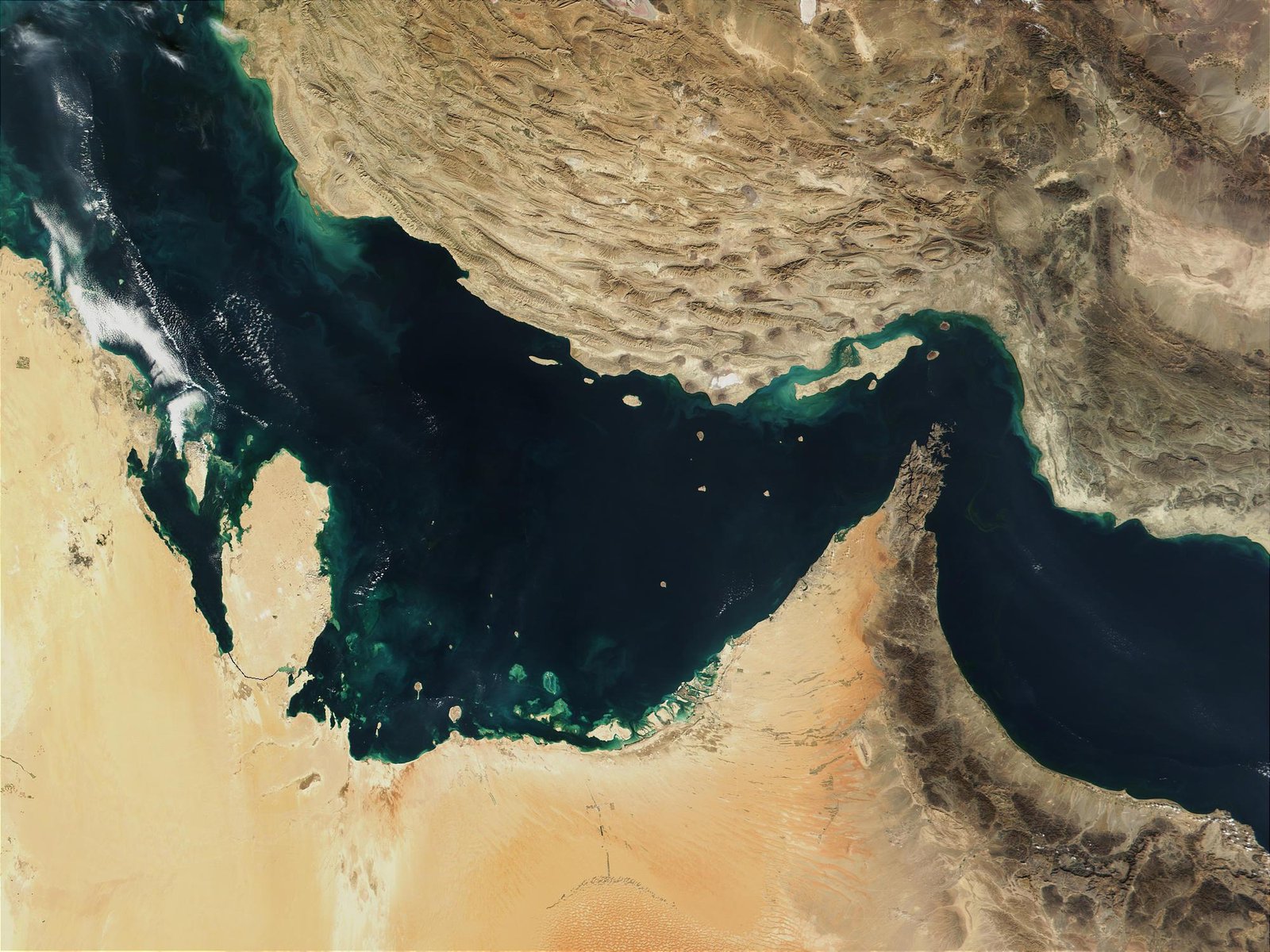
Dan: One of the most troubling features of the current U.S.-Israeli war with Iran, which began in late February 2026 and has since expanded into a wider regional escalation involving Lebanon and the Strait of Hormuz, is the limited and highly ambiguous legal justification publicly offered by the United States and Israel for their use of force. The United States did not formally present its legal position to the Security Council until nearly two weeks after hostilities began, despite the Charter’s reporting requirement when self-defence is invoked under Article 51. Public explanations have also remained vague. Secretary Rubio appeared to frame the strikes as a form of pre-emption against anticipated Iranian retaliation for an imminent Israeli attack, a rationale some commentators have described as “double pre-emption.” At the same time, U.S. officials have avoided clearly identifying the legal doctrine on which such reasoning would rest: Ambassador Mike Waltz stated only that the action was “in line” with Article 51, without elaborating or explicitly invoking either pre-emptive or anticipatory self-defence. While Iran has also claimed self-defence in responding to U.S. and Israeli attacks, its reprisals against non-belligerents have likewise raised serious questions under the Charter framework. Against that background, how do you assess what U.S., Israeli, and Iranian conduct reveals about the current legal and political condition of Article 2(4) and the broader framework governing the use of force? Do these developments point to the death of Article 2(4), or would that be an overstatement?
Dr. Al-Aridi: It is important to note that Article 2(4) of the UN Charter is politically in bad shape, but not legally dead. As legal practitioners and experts, it is our duty to continue emphasizing the fundamental purpose of Article 2(4) and the prohibition on the use or threat of force between states; we should never remain silent on this matter. It’s quite clear that the explanations of double preemption clearly fall outside the Charter framework, while anticipatory self-defense remains, at best, highly contested within it. Therefore, it would be helpful to first outline contemporary international law, the UN Charter that replaced medieval just war theory (Augustine/Aquinas) with strict legal prohibition, no unilateral discretion, so we have a basic understanding of the jus ad bellum as it stands today. The prohibition of the threat or use of force in Article 2(4) is both explicit and ironclad. But there are two limited exceptions permitted by the Charter framework. First, the Security Council can authorize the use of force in accordance with Chapter VII, and second, states reserve a right of individual or collective self-defence in Article 51 of the UN Charter. Self-defense in the charter is an exception, not a strategic doctrine, and that’s where lawfare becomes dangerous when legal vocabulary is used to mask strategic choice.
The evolution of jus ad bellum shows that controversial uses of force almost invariably rely on expansive interpretations of Article 51. Think of the US and Iran, or Russia and Ukraine, among many other examples. It’s of course important to mention that the invocation of the right of self-defence does not necessarily speak to the factual validity or righteousness of that state’s justification (what I mean by this is the conditions for an attack to be treated as an armed attack triggering the right to self-defense). But you raise an interesting point that more recently (and specifically with the example of US-Israeli conduct against Iran), legal justifications can also fall outside of this Charter framework altogether. And it’s these justifications that can genuinely pose a serious challenge to the integrity of the international legal order. Here, I want to highlight the dramatic shift from the traditional understanding of necessity requiring that it be “instant, overwhelming, leaving no choice of means, and no moment for deliberation,” as articulated by Daniel Webster, vs. Marco Rubio’s “double preemption” theory, which lacks any legal justification.
Dan: State practice regarding violations of Article 2(4), especially in this case, does not seem especially promising for the Charter framework. Canada expressed fairly positive support, while states like Germany only very tepidly criticized the lack of a legal basis, but nonetheless made clear they “share the goals” of the United States and Israel. So far, the primary critics have been Spain, France, and Italy.
Do you think this may be indicative of a more worrying trend cutting against the rules-based international order? I have seen commentary suggesting that a new normative framework is taking shape in international law — “illegal but legitimate” — which would essentially amount to abandoning the strict prohibition altogether. Or, to put it more technically, do you see the Article 2(4) prohibition as a peremptory norm that state practice cannot simply override, or as something that is eroding and being replaced by another legal or normative framework? If so, what?
Dr. Al-Aridi: I would certainly caution against being too pessimistic about the state of the prohibition on the use of force. I would argue quite strongly — and legal scholarship broadly supports this view — that Article 2(4) is a peremptory norm, meaning that it cannot be altered by state practice in the same way as other norms of customary international law. Generally speaking, contrary state practice can begin to reflect a fundamental shift in an existing norm, or the emergence of a new one; and in international law, silence or ambiguity can gradually weaken a rule, because clear protest helps sustain legal norms. But that is not how peremptory norms operate. The process by which such a norm may be changed is set out clearly in Article 53 of the Vienna Convention on the Law of Treaties: it can be modified “only by a subsequent norm of general international law having the same character.” In that sense, the prohibition on the use of force stands on the same legal plane as the prohibition of genocide and other atrocity crimes.
Your previous question also alluded to an important feature of how the international legal order operates. When states go to great lengths to justify their actions within the Charter framework — particularly through invocation of the right of self-defence — they are, in a sense, reaffirming the treaty and customary rules that structure that framework. So even where a state advances a justification we may regard as unpersuasive, or as an overly stretched interpretation of Article 51, that does not necessarily degrade the legal order; in some respects, it may even reinforce it. In the present situation, many states appear reluctant to confront powerful allies directly, even where the legal justification is weak. So yes, there is a worrying trend, but it does not yet amount to replacing the rule so much as weakening its enforcement culture.
It is also important to address the “illegal but legitimate” argument, which emerged in the aftermath of NATO’s intervention in Kosovo and suggests that an action may be unlawful under international law yet morally justified. While that line of reasoning may sometimes be advanced in the name of atrocity prevention or human rights protection, it must be treated with caution. If states are allowed to justify the use of force on the basis of their own moral interpretation, there is a serious risk that they will pursue their interests under the guise of ethical reasoning, thereby undermining the core principle of the UN Charter. To preserve international order and guard against abuse, the use of force must remain strictly limited to the exceptions recognized by international law.
Dan: Shifting the conversation to IHL, I want to begin with a broader question. International law has always stressed a strong separation between the legality of a state’s resort to force and the legality of its conduct in war; neither necessarily says anything about the other. But if states increasingly justify unlawful wars with legal rhetoric, do you think this affects compliance with IHL? In other words, is this separation fading?
Dr. Al-Aridi: It’s an interesting question, but I don’t really think that this has a meaningful impact on compliance with IHL. The Geneva Conventions, Hague Conventions, and customary IHL are all very clear: applying IHL does not depend on who started a war, or why. Jus ad bellum and IHL are sealed from one another, as the legality of going to war says nothing about how you must fight it, and how you fight it says nothing about whether you should have gone in at all. So, a soldier fighting in an unlawful war is still entitled to prisoner-of-war status, and a state committing aggression must still respect the distinction, proportionality, and precautionary measures under IHL. The reason for this is relatively straightforward. Any state is, of course, going to frame its reasons for using armed force as just and lawful, so it’s the job of IHL to regulate hostilities by protecting those rendered out of combat, and those not taking direct part in hostilities. These conventions and customs have been applicable across very complex types of conflict for so long, specifically because they are meaningfully distinct from those same political forces affecting jus ad bellum that we’ve talked about.
While I think the rhetoric we’ve discussed certainly poses a challenge to the stability of the international legal order, it does so in a more indirect, rather than doctrinal, way. The example we’ve already discussed of the prohibition of the use of force as a peremptory norm is a good example of this. Even when a state starts a war based on pretenses that we might argue are incorrect interpretations of Article 51, IHL will still apply.
Dan: Tying together both jus ad bellum and IHL, how should treaty law and customary international law respond to the challenges we have been discussing? I am interested in both dimensions separately. The international community has made some progress in codifying IHL in treaty law, for example through the proposed Convention on the Prevention and Punishment of Crimes Against Humanity. At the level of customary law, I would argue that not all hope is lost in preserving the legal order. As some observers have noted, many states have condemned the U.S.-Israeli violation of Article 2(4), including Indonesia and France, while even the UK has walked a very fine line in defending the international legality of its actions. But is that enough? In what ways can treaty law and customary international law better adapt to both degrading norms and hybrid conflict?
Dr. Al-Aridi: I want to stress that although some would argue for the introduction of additional treaties or rules, I believe that the issues of state adaptation to and compliance with international law are first and foremost a question of how existing law is interpreted. In other words, the rules are already there; it’s just a matter of applying them to changing circumstances. This is the case both for jus ad bellum and IHL. We’ve discussed the role of Article 51 and customary international law on the right of self-defence, as well as the Geneva Conventions and customary IHL. Just last year, for example, the International Committee of the Red Cross (ICRC) published its latest commentaries on the Geneva Conventions to better interpret and apply them to the changing nature of armed conflict.
One thing we haven’t touched on yet that I think is especially relevant to your question of resilience is the role of international courts and tribunals. It was, of course, the International Court of Justice (ICJ) that gave us the contemporary understanding of the right of self-defence in the Nicaragua case. And the International Criminal Court has played an instrumental role in upholding and enforcing IHL. Strengthening the ability of these judicial bodies, such as the ICJ and ICC, or organizations such as the ICRC, to fully apply or interpret existing law is the best way to combat the threats posed by the misuse of law — what we have referred to as ‘lawfare’ — to the international legal order that we touched upon earlier.
Dan: Shifting back to the events unfolding in the Middle East, what does Israeli conduct in Lebanon — both in the context of jus ad bellum and IHL — say about the exceptions to the prohibition on the use of force and the authoritative status, or lack thereof, of IHL? And what distinctive features of this conflict can help us better analyze the application of international law in hybrid war and a rapidly changing international legal order?
Dr. Al-Aridi: The term hybrid warfare, about which I’ve written and taught for many years, is often associated with Frank Hoffman’s work on the 2006 Israel–Lebanon war. Hybrid warfare is nothing new, but it is quite relevant in the post-UN Charter era, given that the use of force is prohibited unless within the limited exceptions. States and non-state actors relied on multiple means and methods that grant them plausible deniability and avoid direct attribution through a complex combination of unorthodox measures that fall below the threshold of direct confrontation or armed attack. That also applies to situations of armed conflict, the use of new technologies, and the involvement of civilians, which challenge the direct participation of civilians in hostilities. So hybrid warfare is emerging and relies heavily on escalation and de-escalation while maintaining a level of ambiguity, challenging the legal order. But what everyone needs to know is that we have no legal vacuum. IHL and the law on the use of force are applicable and capable of addressing all current and future challenges or technologies, but we have to make sure any lack of clarity requires the ethical use of law through judicial bodies for interpretation and solving disagreements, rather than allowing states to interpret according to their own interest.
For the conflict in Lebanon, especially the recent ones, it cannot be separated from the conflict in Iran or Gaza, as the dramatic escalation in the region has been linked at all levels. But to purely focus on the legal analysis of the case, a few things we need to highlight: the claim that the use of force in Lebanon was justified under self-defence is difficult to sustain. Applying the conditions for the use of force, proportionality was not respected, as we see that the actions against Lebanon were not to stop an imminent threat but were disproportionate, with over a million displaced people and thousands of casualties. Necessity was also not fulfilled, nor was there UN Security Council authorization. As you see, I am highlighting the importance of sticking to international rules as articulated in the UN Charter and interpreted by the ICJ.
Now, with regard to the non-state armed group and its link to foreign states, that is the case when applying the effective control test set out by the ICJ in the Nicaragua case to identify the relationship between armed groups and states. Arguably, this applies to Hezbollah and Iran, but that’s another topic that requires a different analysis. From an IHL perspective, many violations are occurring from both sides regarding not targeting civilians or civilian infrastructure, and that requires both parties to take all precautions in their operations, but again, this has not been respected. As I said before, international law is in very bad shape politically, but legally it is not dead, and we should never allow it to be.
Israeli (and American) justifications for the use of force in the current conflict with Iran have certainly both stretched the Charter framework and attempted to introduce legal justifications outside it altogether (double preemption and anticipatory self-defense, as we’ve discussed). On the other side, the retaliation of these operations by Iran in targeting neighboring Gulf countries is also a clear violation of state sovereignty and the use of force, particularly as they have not allowed the use of their territory to launch attacks against Iran in line with the due diligence principle, where states must make sure that their territory is not used to harm other states. It is especially in cases like this where both jus ad bellum and IHL face the greatest test and are most heavily strained. There are no doubt troubling signs, but state practice in response to these violations has taken the form of condemnation of unlawful conduct and strong support for the institutions of international law. And this state practice shows that there remains strong support for the rules and norms that govern the resort to force and armed conflict.
Tessera thanks Dr. Alaa Al-Aridi for his time and insights.